Wanderlust
Charlotte Fortney
Class of '28
Inspired by Into the Wild
The rich earthy smell of the world outside your walls dancing in your nose
Roaming freely, your feet twitch towards the green unknown
The desire to see, to smell, to simply experience
Wanderlust can be understood as a plague of the most wonderful kind
One that may only be cured by succumbing to your disease
Some say its the illogical and impractical urge to become but a sojourner passing through
Oh but wanderlust is our greatest calling
To let go and fill our seconds with life
In as many different shoes as we can wield to fit on our feet
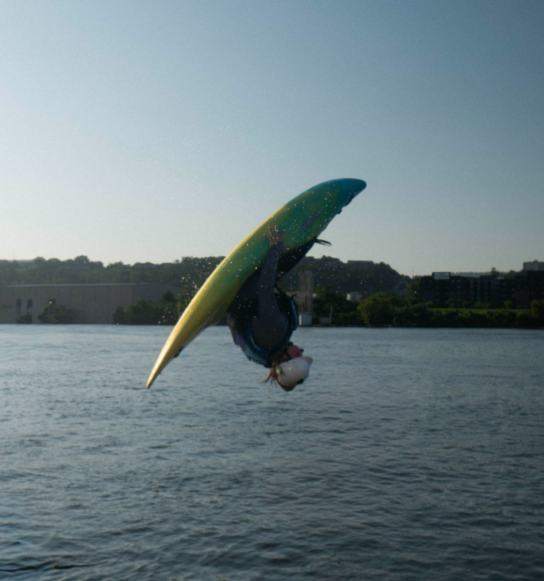
Rivergames 1-10
Noah Mizutani
Class of ‘28

Rivergames 1-14
Noah Mizutani
Class of ‘28
E.F.W.
Margo Windemuller
Class of '27
In the garden, the shtk, sssshtk
Sshtk
Of the lighter strumples
the dimming air. The brown-haired flick
Of a boyish little thumb follows
A spluttering
cough of the old metal box, grating
mossy teeth and flinging
flint spittle
His warm palm
Rests firmly against the engraved
Initials of the dusty mechanism
E.F.W.
He forgets who it’s for
Ssshtk. Ssshtk.
fssszzZZZZ!
The cover snaps in place;
For two dancing minutes
The garden disappears
E.F.W. reaches out
To rest
a rusty hand
upon his grandson’s shoulder
In meeting at last they realize
They’ve known each other
For the entirety of their lives
So together they watch
The sprightly star twitter, suspended
Growing and shrinking
At the end of a sparkler
The colors puff into nothing
Burned nigh to
crumbly exhales
The garden deftly returns
while fathers and fathers are
forgotten
The amazed gaze beneath
the curtain of mousy brown
is perpetual, and infinite, perceiving
the brighter colors
That only exist
Once the light burns out
And as the garden is drowned
in the moonrises, and sunrises
tangled in weedless beauty
The charred sparkler tossed—
into fresh mulch.
The world glitters
in every quiet spin
Of the file wheel,
still warm.
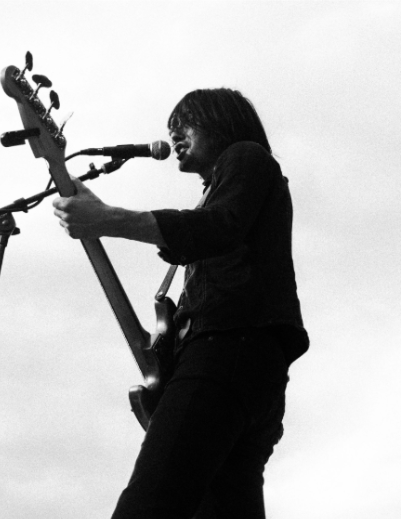
Pipes 1-7
Noah Mizutani
Class of ‘28
Ode to the Cast Iron Skillet my Mother Found in my Grandmother’s Cabinet
James Hood
Class of '27
A heavy new moon,
pitted and scarred by fifty years of grease,
And the spatula’s scrape.
Every morning she rose with the rosy-fingered dawn,
to defend her throne,
to clear the shadows from the hall (our eyes).
While pouring libations of hot coffee,
and freeing incense of bacon into our atmospheres,
‘Lone at the hearth, but for her chosen instrument,
she strung our days together on a piping iron loom,
until hunger was routed; the house hers ‘til the next dawn.
She seasoned with the oil of a thousand Sunday mornings—
frying patience into the craters of the metallic moon.
Iron waxing into a slick, shining memory.
Now, it sits on my mother’s stovetop.
Identical in its gravity,
she handles the same weight, with the same noble purpose.
We dare not scrub,
We respect the buildup.
It hoards the heat of the blue flame and refuses to let go.
Iron’s irony,
is a cold, black stone learning to glow.
It outlasted her hands, and,
when she lost her warmth,
it never did.
Still radiating—for each rosy-fingered dawn.
Fulfilling its noble destiny.
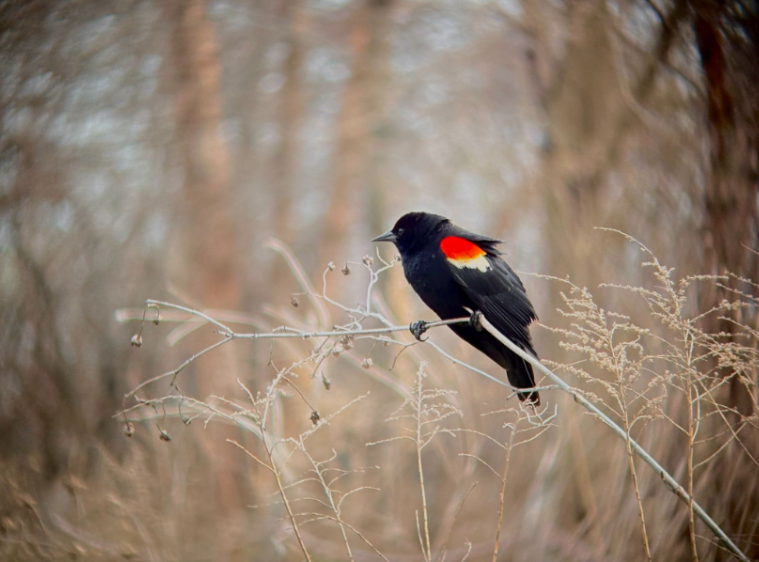
Bird 5
Willem Dunmore
Class of ‘27
By the House of the Old Woman and her Garden
Margo Windemuller
Class of '27
There sits a bit of drying moss in the shade of a Forest Avenue curb. Some scraps of leaf
litter tangle with this dirty green, while spates of crumbled gravel sputter down the abutting
drive by the house of the Old Woman and her garden. It’s really quite beautiful—spilling out
brilliant hydrangeas every which way; brimming with every year’s trend of spring or summer
flowers. All bred to puff up, bright and sprightly, sweetly beckoning to schoolchildren and bees.
The moss listens closely to the conversations of the lordly garden: commentary on fresh
happenings of the crazy man who works in jewels across the street; complaints about too fast
drivers riding the bend of their corner a little too fast; maybe gushes of the Old Woman’s diurnal
routine. Every day, someone walks by the moss, perhaps kicking up twigs in its tangles. This
ambling looses a secret song resonating in the delicate ears of the moss, vibrating at a frequency
only plants can understand. The notes are laced with joy, pride, wonder, and hate. Most coveted
is love. Love nourishes.
The moss is well informed in the ways of the world.
The Old Woman continues to work her garden, and smiles at passersby. The crazy
jeweler compliments her work, thinking it picturesque– a daintily cut quartz set painstakingly
in a band of silver.
“It’s a fine beauty in careful planning, in practice and discipline and sanity. So very
human.”
And when the Old Woman is laid to rest, buried beneath the face of earth she worked so
hard to conduct, moss rises up with dormant ivy. The daffodils and the hydrangea let loose tight
posture as the button rose bushes hunch over the brick border and the creeping jenny tumbles
down the lawn. In the eye sockets of the Old Woman seeds have nestled in. In her ear canal they
sprout. Every discourse of philosophy shudders in the aged mulch, all tragedies are told to
painted vines from sidewalk weeds, and a great meeting of ancient folly and young wisdom
whispers in upstarts of pollen. Clover breaks the soil, born from cracked bone. All stories exist
in a single vein of fresh-faced leaf. Rot is the love that nourishes.
More people walking the path find themselves slowing down ‘round that titchy bend;
they notice more and more the Old Woman’s house and her beautiful garden. Some consider it
wild now that it has neither of those things. Casting wispy eyes and noses over some plants they
can’t name, some remember a promising spring morning underneath the favored tree of
childhood. Others trace vestigial signs of careful affection and attention, but can only possess the
fragile impressions left behind on the surface.
Few reach down pairs of suddenly youthful hands to caress either soft clover or wizened
moss sponge—hand unmarred and ten years old again. Finally, finally, their ambling hearts are
being held; their silly laughs joined; their quiets griefs mourned. They marvel a garden
untended, seeing a rare beauty beyond human ability.
Underneath thick gossip of button roses a cough of plush clover burgeons as silently as
she can—hoping against hope an Old Woman’s tactile nature won’t find her. When she
eventually comes down to the moss she kneels at the foot of the world. Shoulder to heaven, they
live every lighthearted laugh or hidden grief of the pedestrian. The moss begins teaching the
clover the greatest art of the garden:
“Something listens to all things in raucous sways of tall grasses, in undisciplined swinging
of heavy flowerheads, in chaotic choirs of dirt and stem: something in the green. It lies patiently at
the foothills before the mountain. Pervading man—thrumming in the gait of every soul—is need
for the love that nourishes. This is what we must become.”
Pushing forth, in equal vibrancy as gardens, the moss and clover become Atlas in
Northshore—holding up the sky in hush devotion. This hush breaks with a visit of a small boy:
he’s reaching down his own unmarred palm, gently finding moss and clover. And the song of his
heart, the clover discovers, is one she’s sung all her life.
Bird 1
Willem Dunmore
Class of ‘27
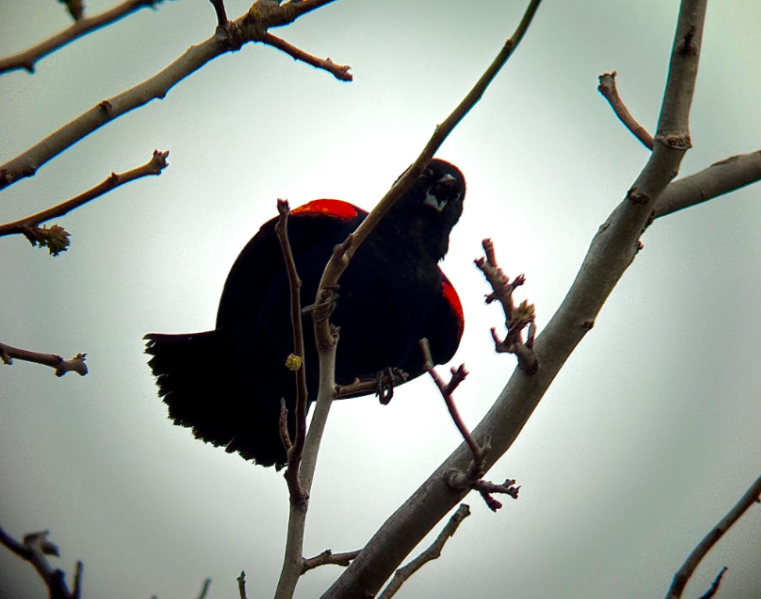
Bird 2
Willem Dunmore
Class of ‘27
Porch Patrol
Margo Windemuller
Class of '27
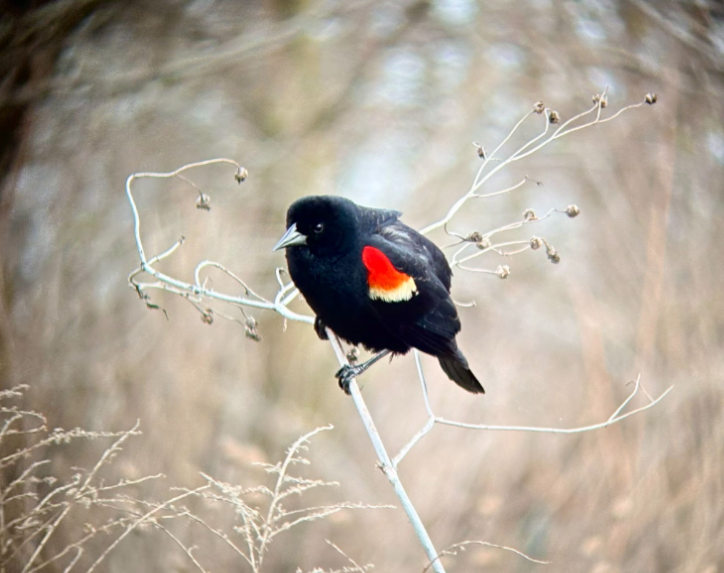
Stubby, salt-dried snatching
of the Eighth Floridian Summer
left the lizard—heaving in—its red crest
and out—some arcane alter offering
I asked the lizard, “sir, what for
are those screen doors if you reach
me all the same?”
My sticky sweet-tea face—pressed
in futility against
the human filter
of Grandma’s screened porch.
Scolding me, the lizard’s—burning—fan bristled:
“not to keep me out.”
And he ducked into the vast, lizardy heaven
of small, impassable places.
Bird 4
Willem Dunmore
Class of ‘27
Fireflies
Tamale Conrad
Class of '28
Verse 1
Memories like tempered glass try to put pieces together
Of my fragmented past
Hidden parts lost through the years
Forgotten dreams still unclear
Can’t seem to shake all the endless fears
Chorus
This stolen light can’t make you whole
No, the trauma’s too deep in my soul
Open the jar to let them go
Fireflies running through the dark
Post-Chorus
Chasing dreams and memories that elude and leave wandering in despair
Feel each light a fluorescent glow like a pulsing heartbeat in the air
I close my eyes don’t want to see my hope slowly disappear
Verse 2
Tiny wings can’t bear the weight
Of burdens so thick they suffocate
There are some things that time can’t sedate
Trying to see what’s in the dark
To stoke an ember I could never start
But even the sunsets and light flickers out
Chorus
This stolen light can’t make you whole
No, the trauma’s too deep in my soul
Open the jar to let them go,
Fireflies running through the dark
Post-Chorus
Chasing dreams and memories that elude and leave wandering in despair
Feel each light a fluorescent glow like a pulsing heartbeat in the air
I close my eyes don’t want to see my hope slowly disappear
Outro
Don’t leave me without light, fireflies
I guess it’s time to say goodbye, fireflies
'Cause you left with your light, fireflies
Rivergames 1-12
Noah Mizutani
Class of ‘28
Untitled
Kiera Shrieves
Class of '29
Jellyfish
Michaela Allen
Class of '29
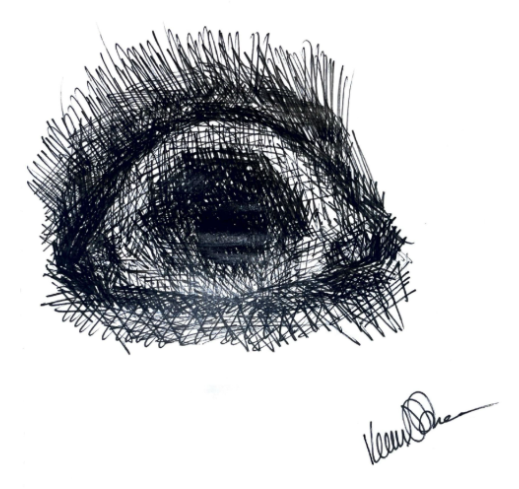
Clouded moon,
Drifting through solid skies
Floating in hazy black solace
Legs reaching for depths
That seem only to hold
Cold, selfish secrets
The light shines through
Her transparent crown,
Destined for the cold darkness,
Ready to shine a breathtaking,
Filtered sunshine against
Every calloused breath
I’ve never met her. I’ve seen
Only pictures that showcase her grace
And ethereal beauty,
Failing to tell of her strength
And battle-hardened soul
If only the midnight reach could
Be captured in more than my
Imagination.
Bird 3
Willem Dunmore
Class of ‘27

A damp vision
James Hood
Class of '27
Submission for the best worst first sentence contest with the Bryan College Literary
Contest.
Ceiling fans ceaselessly swirling in insistent, slimy circles as they sling soggy
sludge around the cylindrical cellar’s circumference leads to a realization: vomiting octopus
trapeze artists.
Untitled Song
Zariah Jean
Class of '27

